The Grass Is Too Tall? What Good Grazing Actually Looks Like
One of the more curious comments I get every now and then on my social media posts comes from folks I’ve deemed The Great Grass Detectives.
“The grass is way too tall for you to actually be grazing there.”
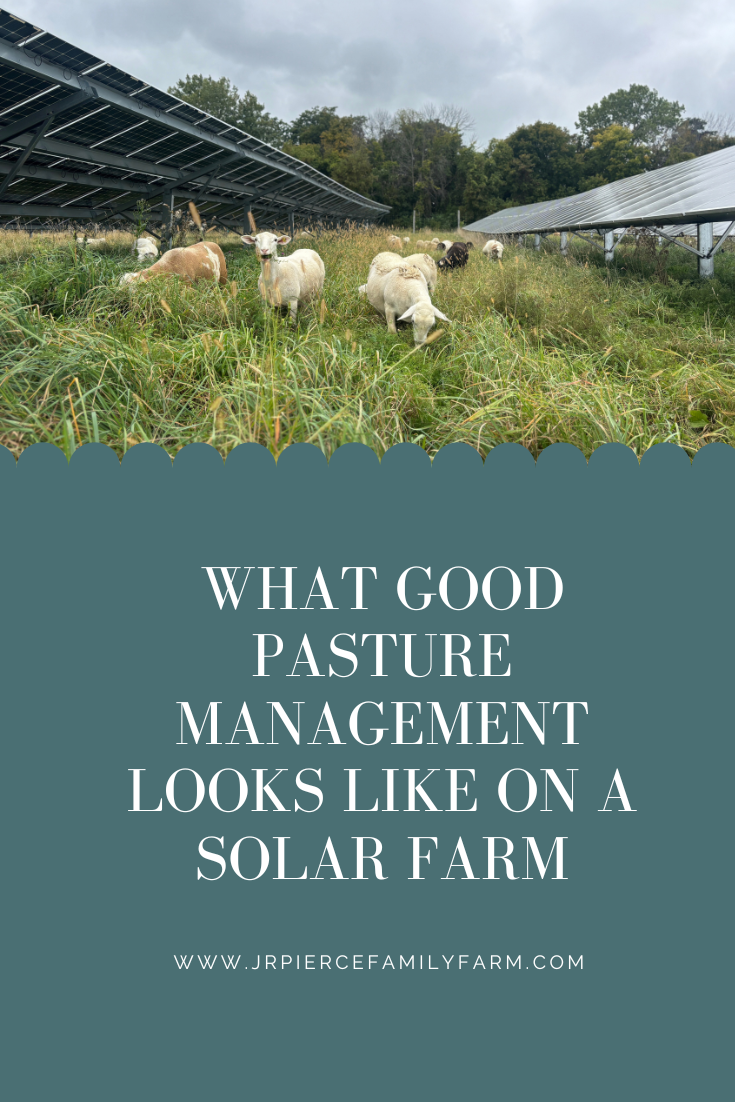
I’ll lead with the disclaimer. More often than not, the images I post DO tend to feature taller forage. The reason for that is fairly simple: I usually take photographs after the work is done (the work being moving the sheep or cows to a new grazing strip) and they’re not paying attention to me anymore, but to their food. They’re much easier to photograph (and the pictures turn out a lot better) when I capture them this way.
But there’s another piece worth discussing here. Folks see photos of a flock standing belly-deep in forage and conclude we aren’t grazing because the site isn’t clipped golf course-short. There may be a few seedheads, and some plants are taller than others. The site lacks uniformity.
That’s kind of the whole point.
We’ve become so accustomed to lawns trimmed right down to an inch, to golf courses that look perfectly manicured no matter the time of year, that we expect grazing lands to look exactly the same.
But good grazing management has less to do with uniform grass height and more to do with intention. Grazing pasture too short, too often, is one of the fastest ways to weaken the plants, reduce root growth, expose soil, sicken animals, and make the whole system less resilient and less effective.
We don’t manage our appearance. We manage for outcomes. So let’s talk about what those are.
Tall Grass Does Not Mean “Ungrazed”
A pasture can be in active use while still looking tall. Rotational grazing works by moving animals through smaller areas for shorter periods, then intentionally giving those areas time to recover before the animals return.
The sheep don’t enter a paddock and mow every plant down to two inches. That’s just not how they eat. They graze selectively, taking the leaves they want first, often leaving stemmier material, seedheads, or less palatable species behind. Depending on the time of year, stocking density, weather, and forage conditions, a grazed paddock can still look pretty lush when they move out.
That’s not failure. It’s often exactly what we want. If animals are leaving enough residual behind, the plant still has leaf area available for photosynthesis. It can regrow faster, its root system stays stronger, and the soil stays shaded. Moisture is more readily conserved. And the next grazing rotation has a better chance of producing quality forage again.
In a sense, pasture plants are solar panels, too - and we need to manage those plants in a way that maximizes their overall productivity.
Why Grazing Grass Too Short Creates Problems
Plants need leaves to regrow. That sounds painfully obvious, but it’s easy to forget when short pastures look “clean” and “healthy.”
When livestock repeatedly graze plants right down to the ground, the plant has to draw heavily from stored energy reserves to rebuild its leaves. Do that often enough, and root growth suffers. The plant gets weaker as less competitive species begin to disappear and weeds gain a foothold. Bare ground might also start peeking through.
Now you have hotter soil, less water retention, more erosion risk, and poorer forage production, which can become a nasty cycle that’s hard to break.
Short grass also gives the animals less to choose from. Sheep are selective grazers. When we give them a paddock with enough forage mass, they can take high-quality bites efficiently. If we leave them in one place too long, they start coming back to plants they already grazed while ignoring tougher material elsewhere. That repeated grazing of fresh regrowth is especially hard on desirable forage species.
What is the “Right” Grass Height?
There’s no single perfect number because pasture management depends on the species growing there, the animal you’re grazing, the season, the moisture, and your management goals.
But generally, we want animals going into pasture that has enough height and leaf mass for efficient grazing, and we want to move them before they take it down too far.
For many cool-season pasture systems, that might mean entering somewhere around 8 to 12 inches and leaving roughly 3 to 4 inches of residual. Some forage species should be taller, and some can tolerate shorter grazing. Mature, stemmy forage has a different threshold, too.
TL;DR is that these guidelines are just that: guidelines, not commandments. What matters is that regrowth is protected.
You also have to account for the fact that a solar site, like any pasture, is not a uniform pasture. Forage underneath panels may grow differently than forage in full sun, and shade changes plant maturity. Some areas are lush while others are thinner. Fence lines, inverter pads, access roads, and panel rows all affect how animals use the site.
Rotational Grazing is All About Timing
The biggest advantage of rotational grazing is control: instead of giving sheep access to an entire property all season and letting them graze their favorite plants over and over, we divide the area and move them deliberately.
They graze one section, then we move them, and that section rests. We move through the rest of the site (or even move off-site to graze another location), and eventually return after the plants have had time to recover.
We aim for a 30-60 day rest cycle, depending on a few different factors. The actual rest period can change, since grass grows quickly in the spring and can recover fast, but summer heat or drought can lengthen that recovery period. Animal health plays a big role here, too, which I’ll get to later.
Good rotational grazing requires us to monitor that timing and to watch the pasture with vigilance. We watch regrowth, we watch the weather, and we watch the animals, and then we adjust. Some weeks, the challenge is keeping up with explosive spring growth. Other weeks, we are deliberately slowing the rotation down because growth has stalled and the plants need more recovery time. Pasture management, in this way, is incredibly dynamic.
Tall Forage Can Benefit the Animals Too
There’s a livestock side to this beyond just preserving the plants: taller forage gives animals the opportunity to take larger, more selective bites. In hot weather, that forage also helps keep the ground cooler and holds more moisture.
On solar sites, the panels add another layer. We have repeatedly seen forage stay greener under and around panels during dry conditions. Shade reduces heat stress for the sheep, and moisture can persist longer in protected areas. We have also observed differences in frost and growing conditions that can help stretch grazing at the edges of the season.
When you combine shade with good grazing residual, you have a system that can hold onto moisture much better than one that is constantly scalped.
Then there’s what’s arguably our biggest reason for careful rotations: parasite management.
All ruminants are vulnerable to gastrointestinal parasites, but sheep especially so. These larvae live close to the soil surface, and so if animals are allowed to keep grazing the same area (especially after they’ve already clipped the pasture short), they’re more likely to come back and graze fresh regrowth close to the ground where parasite exposure can be higher.
That’s why we try to avoid back grazing, which is what happens when animals are allowed to return to sections they already grazed (and manured on) before those plants have had enough time to recover. The sheep naturally go back to the tender new growth because it is more palatable than the taller, stemmier material they skipped the first time.
From a pasture standpoint, that repeatedly stresses the same plants.
From an animal-health standpoint, again, it can also increase exposure to parasite larvae concentrated lower in the forage canopy.
So when we move sheep through a solar site, the objective is not to keep them in one place until every plant is eaten down to the ground. We want them to take the best part of the forage, move on, and stay off that paddock long enough for the plants to recover.
“But Doesn’t the Solar Company Need the Grass Short?”
Yes, vegetation still has to be managed. The operators we work with have concerns about access, equipment, fire risk, shading, and vegetation growing into infrastructure. That’s exactly why they hire us.
But they also understand that not every square foot needs to look like your dad’s backyard. Good solar grazing requires us to balance vegetation-control standards with plant health and livestock performance.
It’s not always easy, and it’s certainly not cookie-cutter. Sometimes we graze more aggressively in specific areas. Sometimes there are plants the sheep will not eat and mechanical control is still necessary. Sometimes a site has a vegetation issue that livestock alone cannot solve.
Sheep are not tiny wool-covered lawnmowers programmed to cut everything to exactly 3.5 inches. They’re livestock. The point of grazing management is to use their natural behavior productively while maintaining the site.
FAQ
How tall should grass be before sheep graze it?
For many cool-season pastures, sheep may enter when forage is roughly 8 to 12 inches tall, though the right height depends on the forage species, season, weather, and pasture conditions.
Does tall grass mean a pasture isn’t being grazed?
No. Sheep graze selectively, so a well-managed pasture can still look tall or uneven after they move through it. Good grazing management leaves enough residual forage for plants to recover.
What is back grazing?
Back grazing happens when livestock return to recently grazed areas and eat the tender new regrowth before the plants have recovered. That can weaken forage plants and increase parasite exposure.
How does rotational grazing help with parasites in sheep?
Rotational grazing can reduce repeated contact with parasite larvae by moving sheep away from recently grazed ground and preventing them from grazing too close to the soil surface. It’s one part of a broader parasite-management strategy.
Does a solar farm need to look like a mowed lawn?
No. A solar site can be well managed without looking uniformly clipped. The priority is healthy forage, safe access to equipment, effective vegetation control, and productive livestock.
To offset the cost of website hosting fees, J&R Pierce Family Farm is a participant in the Amazon Services LLC Associates Program, an affiliate advertising program designed to allow sites to earn advertising fees by linking to products on Amazon, and the Google AdSense program.
