
Do Solar Panels Contain Chemicals?
Yes.
But so does your smartphone, your roof, your refrigerator, your car, your kitchen windows, even the glass you might be drinking water out of right now.
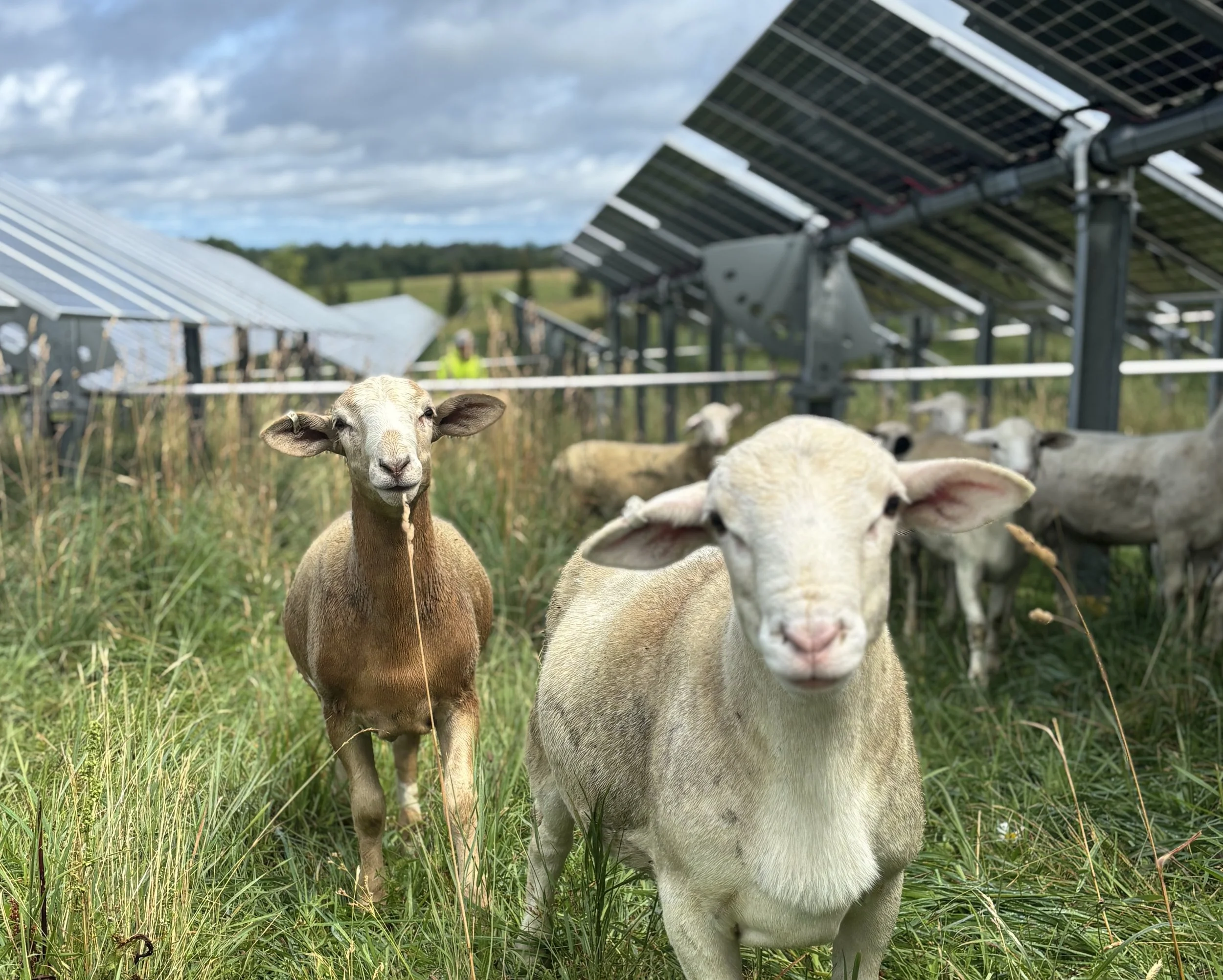
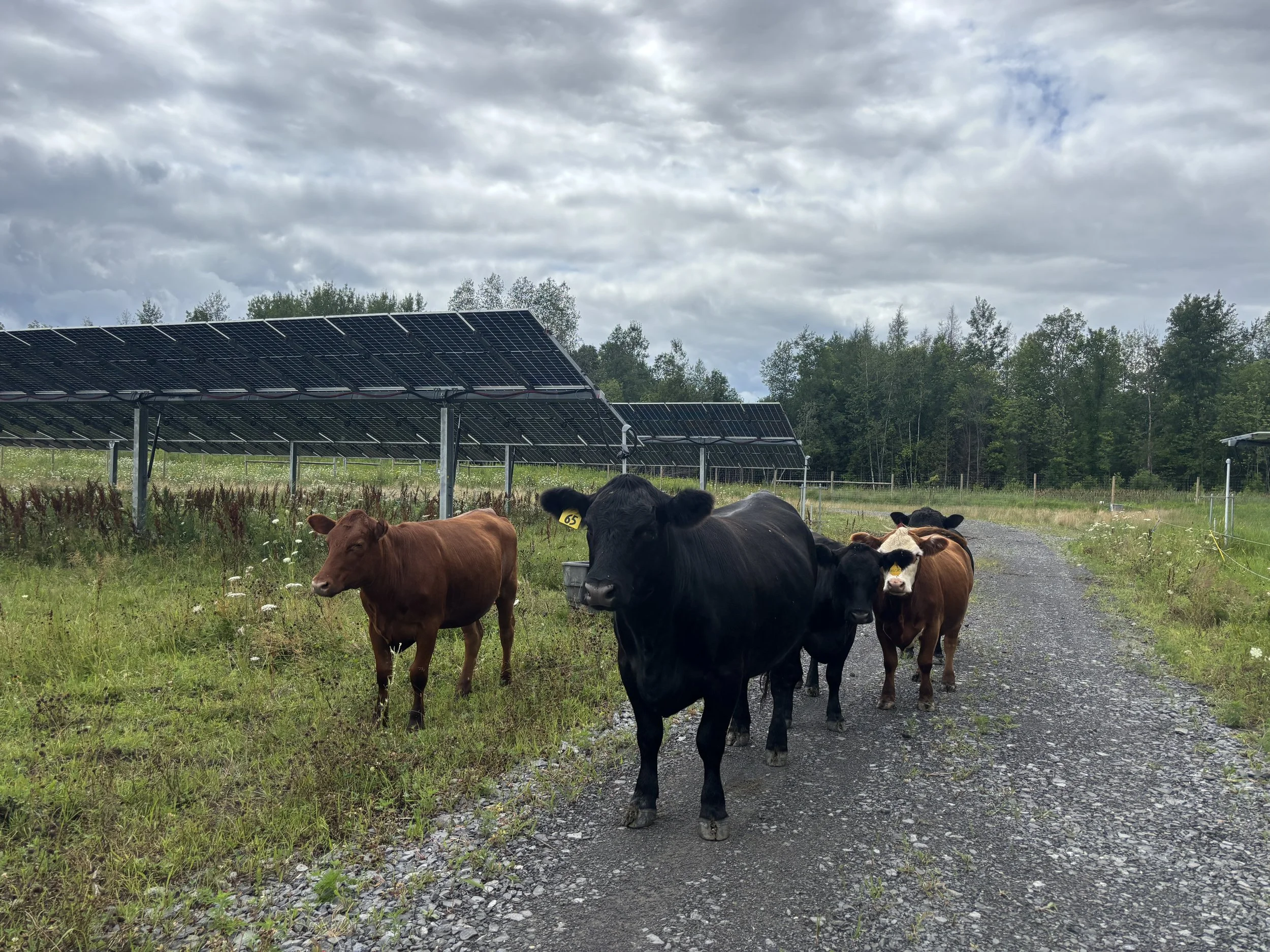
If solar panels were dangerous, we wouldn’t be grazing our sheep and cattle around them. We wouldn’t be advocating for agrivoltaics in the first place.
The presence of chemicals doesn’t mean something is inherently dangerous. Water is a chemical. Salt is a chemical. So, too, is oxygen.
The more useful question is what chemicals (and by that, I think most folks mean “materials”) are found, how those materials are used, whether they’re likely to escape into the environment, and what risks they pose under normal conditions.
These are the questions scientists and engineers are asking when they evaluate any technology, from batteries to building materials.
So let’s talk about it.
What Are Solar Panels Made Of?
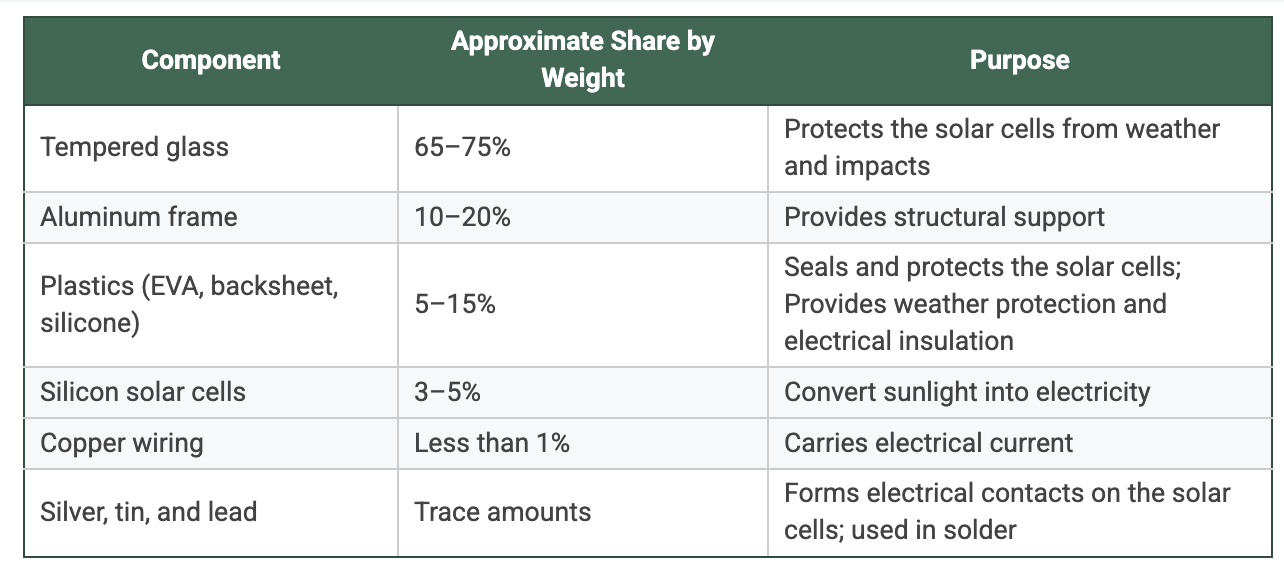
Most solar panels installed today are crystalline silicon photovoltaic (PV) panels, which account for more than 95% of the global solar market. Despite persistent claims online, they're made primarily from some very familiar materials.
Most of a solar panel is simply glass and aluminum. The materials that actually generate electricity make up a small percentage of the panel’s total weight.
Do Solar Panels Have Chemicals In Them?
Yes. However, they don’t contain hazardous chemicals or those that serve as contaminants in normal operation.
The word chemical has developed a negative reputation, but from a scientific perspective, it's a neutral term. A chemical is simply any substance with a defined molecular composition. That means solar panels contain chemicals because they're made from materials like:
Silicon
Silicon dioxide (glass)
Aluminum
Copper
Silver
Ethylene-vinyl acetate (EVA), a polymer that seals the solar cells
Adhesives and sealants
Small amounts of solder
Each one of these materials serves a very specific purpose: glass protects the cells from the rain and wind, aluminum provides strength while keeping the panels lightweight, and the encapsulant bonds everything together while preventing moisture from reaching the electrical components inside.
None of these materials are loose inside the panel, nor can they “leach” as many people have implied or asked directly. They’re permanently assembled through a manufacturing process that uses heat, pressure, and lamination to create a sealed, weather-resistant product that’s designed to remain outdoors for decades.
Do Solar Panels Contain Toxic Materials?
This is where some of the confusion comes in: yes, some solar panels do contain very small amounts of lead. In most crystalline silicon panels, lead is found in tiny solder connections that help carry electricity between components. It isn't present as a powder or liquid, nor is it free to move around inside the panel. Instead, it's encapsulated beneath layers of glass and polymer that are specifically designed to keep moisture out and the panel intact.
Do Solar Panels Contain Cadmium?
Not usually. Cadmium is associated with cadmium telluride (CdTe) solar panels, a different technology that represents an extraordinarily small share of the global market (less than 5%). Even then, the cadmium isn’t present in its elemental form; it’s chemically bonded to tellurium to create a stable semiconductor compound.
Are Solar Panels Hazardous?
Yes, but hazardous is not the same as risky. Many materials can be hazardous under certain conditions, including much of the infrastructure we already trust in their use on farms, like tractors, diesel, batteries, electric fencing, etc. Agriculture has always involved materials that can be hazardous under certain conditions.
The real question to be asking is whether you’ll be exposed to those materials during normal use. For modern solar panels, decades of research and real-world experience suggest that exposure is extremely limited because the materials remain sealed inside the panel throughout its entire operational life.
Can Rain Wash Chemicals Out of Solar Panels?
No. That’s not how modern solar panels are designed.
Each photovoltaic (PV) module is a tightly sealed laminate. The solar cells and electrical connections are sandwiched between layers of tempered glass and polymer encapsulants, then sealed under heat and pressure. This construction is specifically intended to keep moisture out while protecting the internal components from decades of exposure to rain, snow, humidity, hail, and extreme temperatures.
Before they're installed, panels undergo extensive durability testing under international standards such as IEC 61215 and IEC 61730. These tests simulate years of environmental exposure, including humidity, temperature cycling, UV radiation, wind, and mechanical loading.
That’s not to say solar panels are indestructible; like windshields, solar panels can be broken if they’re struck hard enough (but we’re talking…HARD). Under normal operating conditions, properly manufactured solar panels are designed to prevent water from reaching the electrical components inside.
What Happens if a Solar Panel Breaks?
No technology lasts forever - we know that. If a panel is damaged (whether that’s by a falling tree, transportation accident, severe hail, etc), the situation is far less dramatic than it’s often portrayed to be.
A broken panel is primarily a physical safety issue, not an environmental emergency. Broken glass can cause injuries, and damaged electrical equipment should be handled carefully by qualified personnel.
But…that’s it.
From an environmental standpoint, studies have consistenly found that intact and even many damaged crystalline silicon release very little material because the cells remain bonded within the encapsulant layers. The panel should still be removed and recycled, but a cracked module does not suddenly become a toxic waste spill.
That’s not to say proper disposal and recycling aren’t important; like any manufactured product, damaged panels need to be collected and disposed of properly and not abandoned.
Thankfully, we have programs for that. While recycling isn’t widely adopted yet (largely because 70% of all installed solar capacity was installed post-2019 and expected to last 25-30 years), more than 85% of a PV module is made of materials we already have established recycling programs for.
Can Solar Panels Contaminate the Soil or Groundwater?
Just about daily, someone comments on a Facebook post of mine and asks this question. Researchers have spent years studying whether metals can leach from solar panels into surrounding soil and water. And the overwhelming conclusion is that properly functioning crystalline silicon panels present a very low risk of environmental contamination during normal use.
That's because the cells and electrical components are sealed beneath layers of tempered glass and polymer encapsulants designed to withstand decades of rain, snow, heat, and freezing temperatures.
To date, I’ve only found one study that shows evidence of contamination. On a site in Poland, researchers detected elevated concentrations of some elements in soils beneath a photovoltaic installation.
However, the site had previously been used for mining, making it difficult to determine whether the metals originated from the solar panels or reflected decades of historical industrial activity. The authors themselves acknowledged that additional research is needed to distinguish between legacy contamination and any potential contribution from the solar installation.
And let’s not forget: solar panels have now been installed on millions of rooftops, schools, businesses, farms, parking canopies, and even floating reservoirs around the world. This is no longer an emerging technology.
If properly functioning crystalline silicon panels routinely released harmful levels of contaminants into surrounding soils, we'd expect to see consistent evidence across the thousands of long-term installations that have been operating for decades. Instead, the primary environmental concerns identified in the scientific literature relate to damaged panels, improper disposal, and end-of-life management…not panels generating electricity in the field.
We Need to Put the Risk Into Perspective
The internet treats the word “chemical” as though its dictionary definition reads “dangerous.”
But science doesn’t. Toxicologists evaluate risk by asking two questions:
Is the substance hazardous?
How likely is someone to be exposed to it?
Lead, for example, is without a doubt hazardous. But the tiny amount used in solder inside a crystalline silicon solar panel remains encapsulated beneath layers of glass and polymer throughout normal operation. Similarly, manufacturing uses industrial chemicals that are carefully controlled within factories, not left inside the finished product.
No technology is completely without environmental impacts. Mining, manufacturing, transportation, and recycling all require resources, whether we're talking about solar panels, automobiles, smartphones, or power plants.
And as farmers, I think we understand those tradeoffs well. Every decision we make involves balancing benefits against risks.
Modern solar panels contain a variety of materials, including metals, polymers, and, yes, chemical compounds. But decades of engineering, testing, and real-world experience tell us that they’re designed to safely contain those materials while generating electricity.
Like every technology, they do deserve careful scrutiny.
But let’s make sure we’re basing that scrutiny on the science, not the social media scare tactics.
To offset the cost of website hosting fees, J&R Pierce Family Farm is a participant in the Amazon Services LLC Associates Program, an affiliate advertising program designed to allow sites to earn advertising fees by linking to products on Amazon, and the Google AdSense program.
